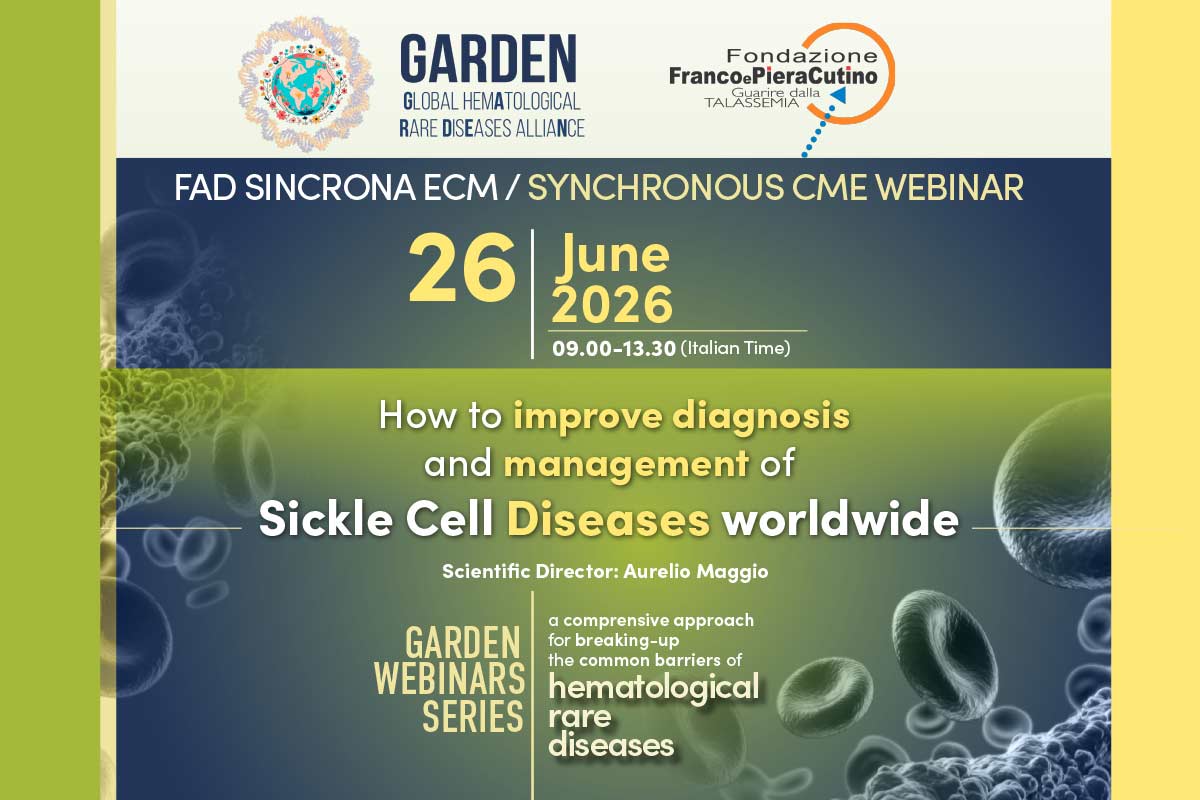
How to improve diagnosis and management of sickle cell disease worldwide
Sickle cell disease (SCD) is one of the most prevalent rare hematological disorders worldwide, affecting millions of individuals across Africa, Europe, the Americas and the Middle East. Although the disease was historically concentrated in specific geographical regions, migration patterns and demographic changes have significantly modified its epidemiology, making SCD an increasingly relevant healthcare challenge in many European countries, including Italy.
Despite major scientific and therapeutic advances, important gaps remain in early diagnosis, appropriate clinical management, laboratory monitoring, and access to innovative treatments. Early identification of patients is essential for preventing severe complications and improving long-term outcomes. In this context, laboratory medicine plays a critical role through neonatal screening programs, advanced diagnostic tools, and molecular characterization of hemoglobin variants.
In parallel, the therapeutic landscape of SCD is rapidly evolving. Disease-modifying strategies, including optimized hydroxyurea use and new targeted pharmacological agents, are increasingly available. In addition, gene therapy and gene-editing technologies are opening new perspectives for potentially curative approaches. These innovations raise important clinical, regulatory, organizational, and economic questions that require continuous education and multidisciplinary discussion.
Healthcare professionals involved in SCD management must therefore be continuously updated on diagnostic advances, laboratory approaches, and emerging therapeutic strategies. Collaboration between clinicians, biologists, and laboratory technicians is essential to ensure appropriate diagnostic pathways, accurate interpretation of laboratory results, and effective patient monitoring.
The GARDEN Network CME Webinar ‘How to Improve Diagnosis and Management of Sickle Cell Disease Worldwide’ aims to provide an updated multidisciplinary overview of the disease, focusing on global diagnostic challenges, innovative models of comprehensive care, emerging therapeutic strategies, and issues related to treatment accessibility and sustainability.
The event is specifically designed for medical doctors, biologists, and laboratory technicians working in hematology and rare diseases, with the objective of improving diagnostic accuracy, strengthening collaboration between clinical and laboratory professionals, and facilitating the translation of scientific advances into routine clinical practice.